Advertisement (Anzeige) – This post was created in paid collaboration with Zehnder.
Why the Zehnder Charleston is still relevant after almost a century – from period apartments to contemporary interiors.
As an interior designer, I spend a lot of time thinking about the details that make a room feel complete. While furniture, materials and lighting often take centre stage, architectural and functional elements deserve just as much attention. Radiators are a perfect example – still too often considered a purely functional necessity rather than a design element in their own right.
Especially when renovating existing properties, unusual room proportions, heating systems installed decades ago or even heritage preservation requirements can make the design process more challenging. Compromises are often inevitable, but thankfully, radiators no longer have to be one of them. With thoughtfully designed products offering so much flexibility in terms of dimensions, configurations and finishes, finding the right solution often opens up possibilities you might not have considered before.
Something I’ve experienced both through my work as an interior designer and in my own home in Vienna – and the reason I want to introduce you to the Zehnder Charleston, a column radiator that has been around since 1930.
What If You Didn’t Have to Hide Your Radiators?
When I moved into my period apartment in Vienna, I fell in love with so many of its original features. The high ceilings, beautiful proportions and architectural details were exactly what I had been looking for. The radiators, however, were a different story.
They were old, rather unattractive and certainly not something I wanted to draw attention to.
Unfortunately, the owner of the building wasn’t particularly open to making changes to the living room radiators, so replacing them was out of the question. His loss, if you ask me!
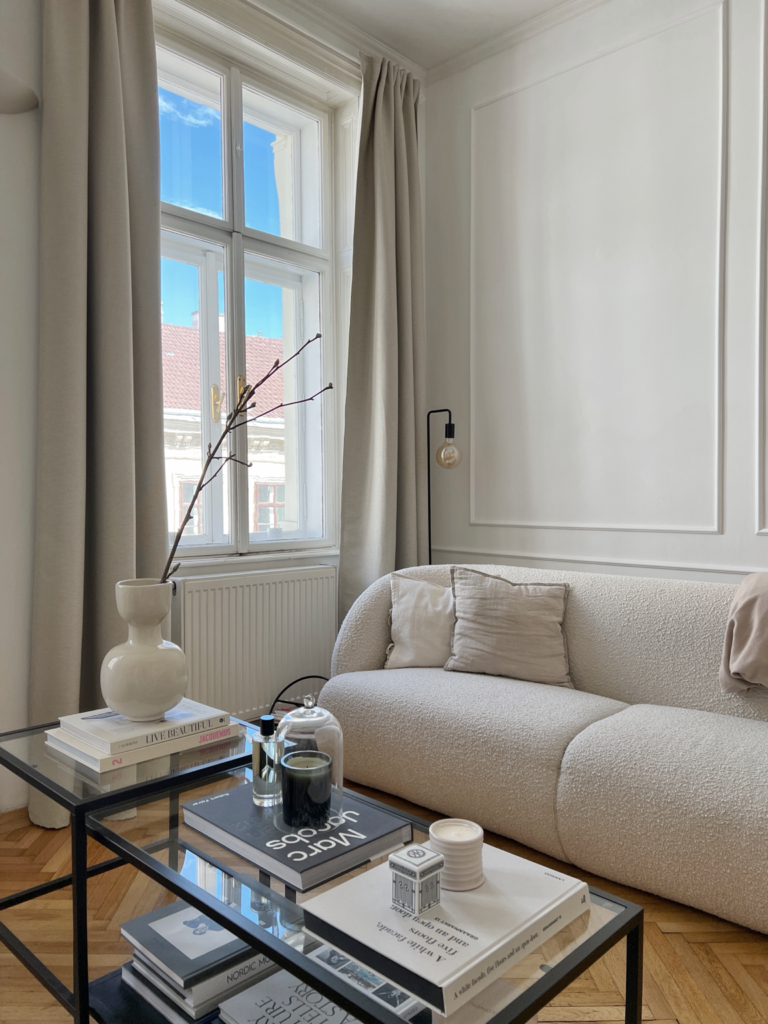
Instead, I decided to design custom radiator covers that would blend into the interiors and make the existing heating feel less intrusive.
It worked beautifully from a design perspective, but it also meant designing an additional element around something that was already there. And as anyone who has worked on a renovation knows, every additional element comes with its own considerations, from dimensions and materials to ensuring sufficient airflow for the heating to function properly.
Looking back, I can’t help but think how different the process could have been if the apartment had already been fitted with radiators like the Zehnder Charleston. Rather than trying to hide them, I would have made them part of the design from the very beginning.
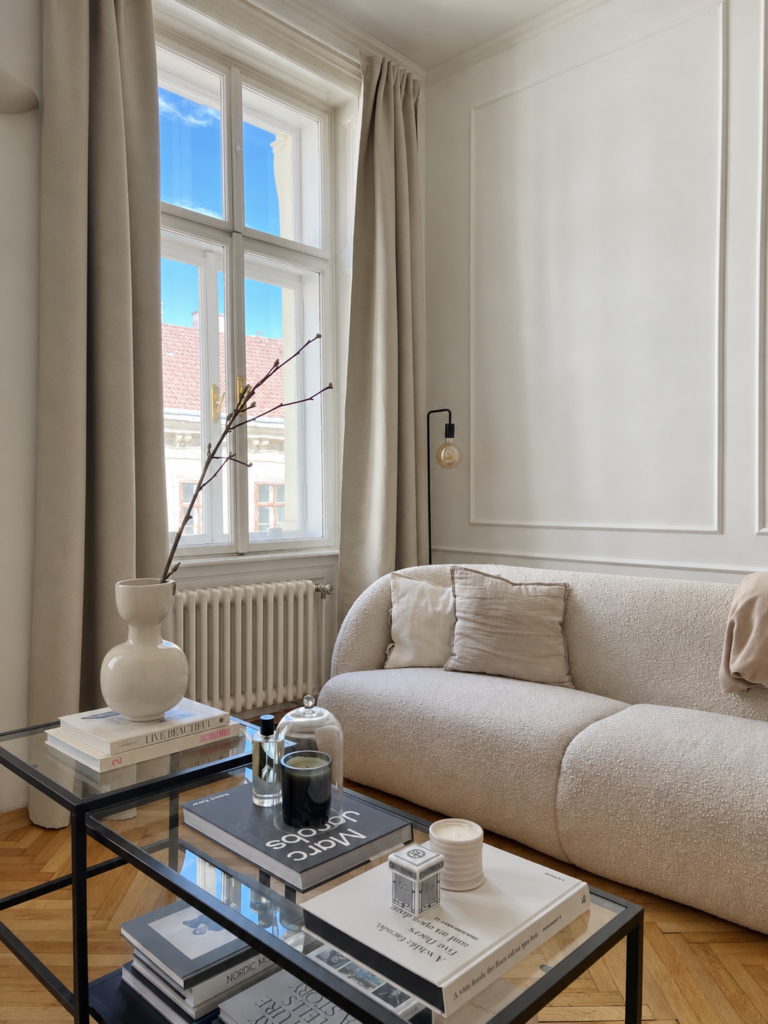
The Zehnder Charleston: A Design Classic Since 1930
One of the things I appreciate most about good design is that it doesn’t necessarily have to be new.
Some pieces have been around for decades and still feel just as relevant today. We see this with furniture, lighting and architecture, so why shouldn’t the same apply to radiators?
The Zehnder Charleston is a wonderful example.
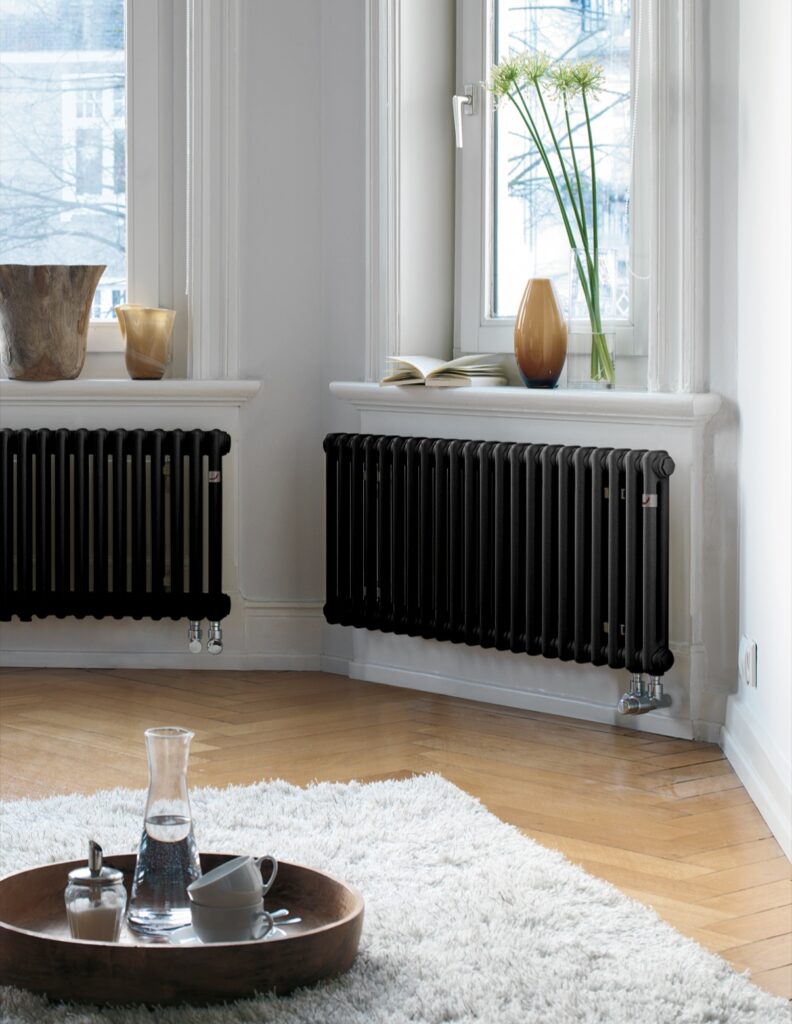
With its origins dating back to 1930, the Charleston celebrates 96 years of design history in 2026. Its distinctive tubular construction has a familiar, almost architectural quality that feels particularly at home in period properties, while remaining simple enough to complement contemporary interiors.
What I find especially interesting is how little a truly timeless design needs to change to remain relevant.
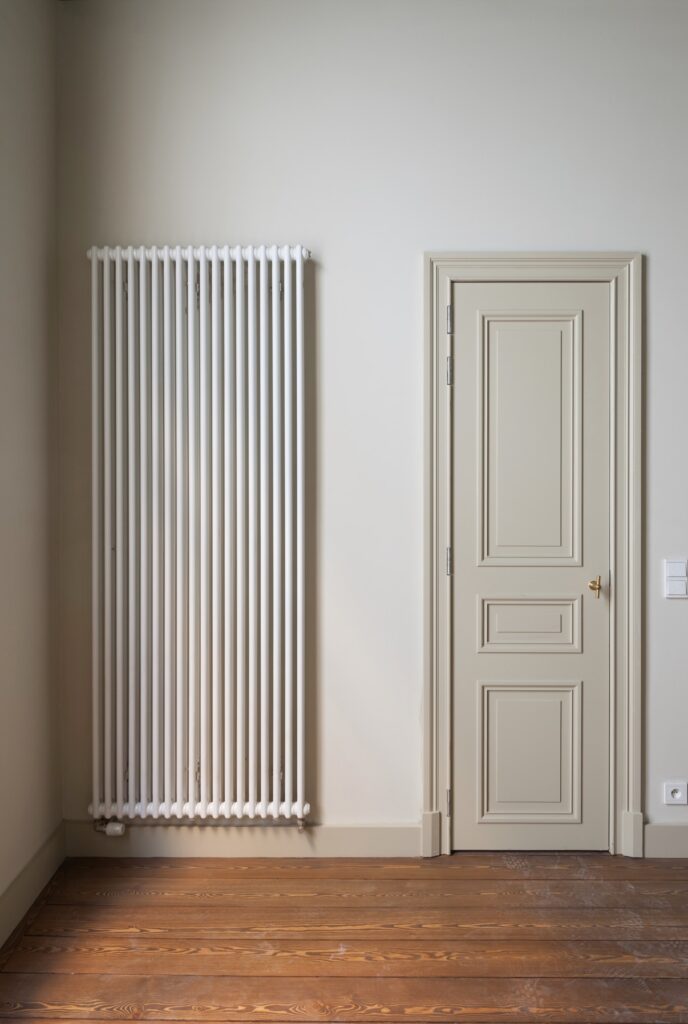
The Charleston doesn’t try to disguise itself as a piece of furniture or an entirely different object. It looks like a radiator, and that’s precisely what makes it work. Its proportions, repetition and understated appearance allow it to become a natural part of a room rather than something that needs to be concealed.
For me, that’s an important distinction. Not every functional element needs to disappear. Sometimes, choosing a beautifully designed version of something essential is the much better solution.
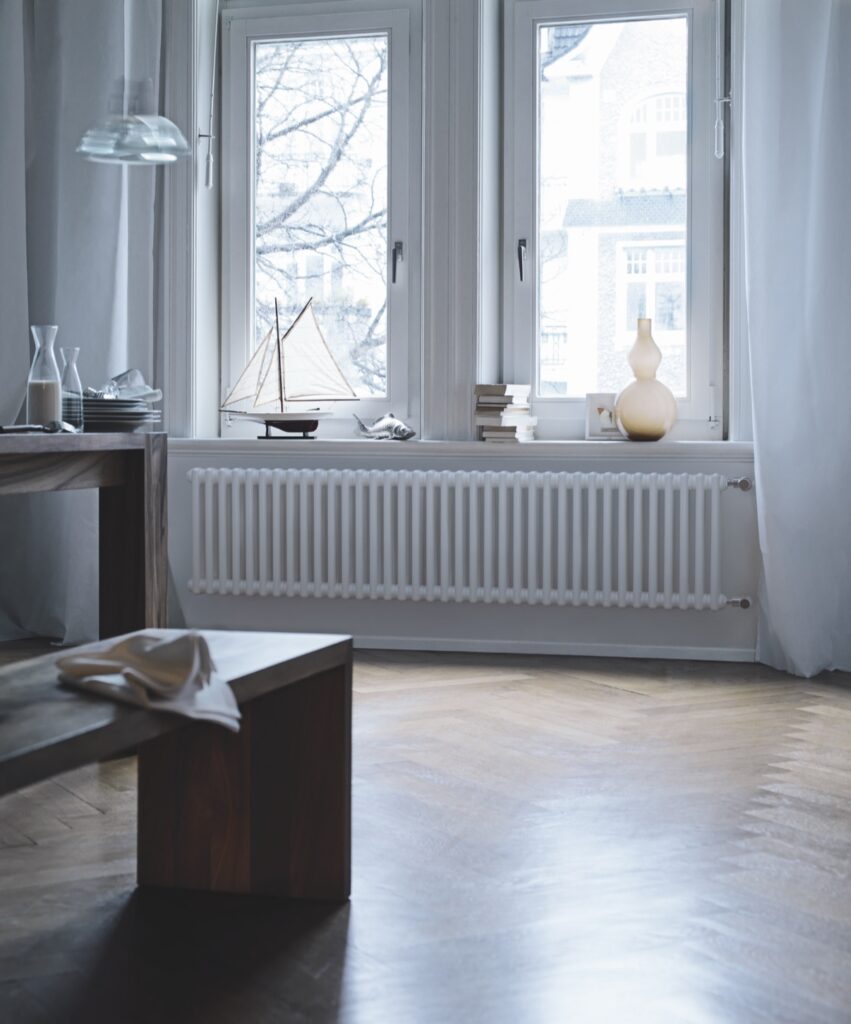
Designed Around Your Space, Not the Other Way Around
Working on renovation projects has taught me that existing buildings rarely make things easy.
And while I absolutely love the character of older properties, they often come with unusual dimensions, existing installations and architectural features that need to be respected.
Window heights might differ from room to room. Walls aren’t always perfectly straight. Existing pipe connections may be positioned somewhere less than ideal. And in historic properties, certain elements simply cannot be changed without affecting the character of the building or requiring additional approvals.
These are exactly the kinds of details that make renovation projects so interesting, but also so challenging.
As an interior designer, my job is to find solutions that work with the existing architecture while still achieving the overall vision for a space.
And this is where the Zehnder Charleston becomes particularly interesting.
Unlike radiators that are only available in a handful of standard dimensions, the Charleston offers an extensive range of heights, lengths, depths and configurations. Different connection options make it possible to accommodate many existing heating installations, while special solutions can help address more unusual architectural conditions.
Depending on the model and technical requirements, even curved or angled configurations are possible.
This flexibility is particularly valuable when renovating period apartments, historic buildings or properties with unconventional layouts. It can also make the Charleston an interesting option for heritage-listed properties, where preserving architectural features and working within existing conditions is often essential. Naturally, any installation must still comply with the relevant conservation requirements.
Instead of compromising the entire design around a standard radiator, you can explore a solution that fits the proportions and requirements of the room.
Of course, the exact configuration, heating output and installation possibilities always need to be checked with the appropriate heating professional. But from a design perspective, having this level of flexibility makes an enormous difference.
A Little Experience From My Own Home
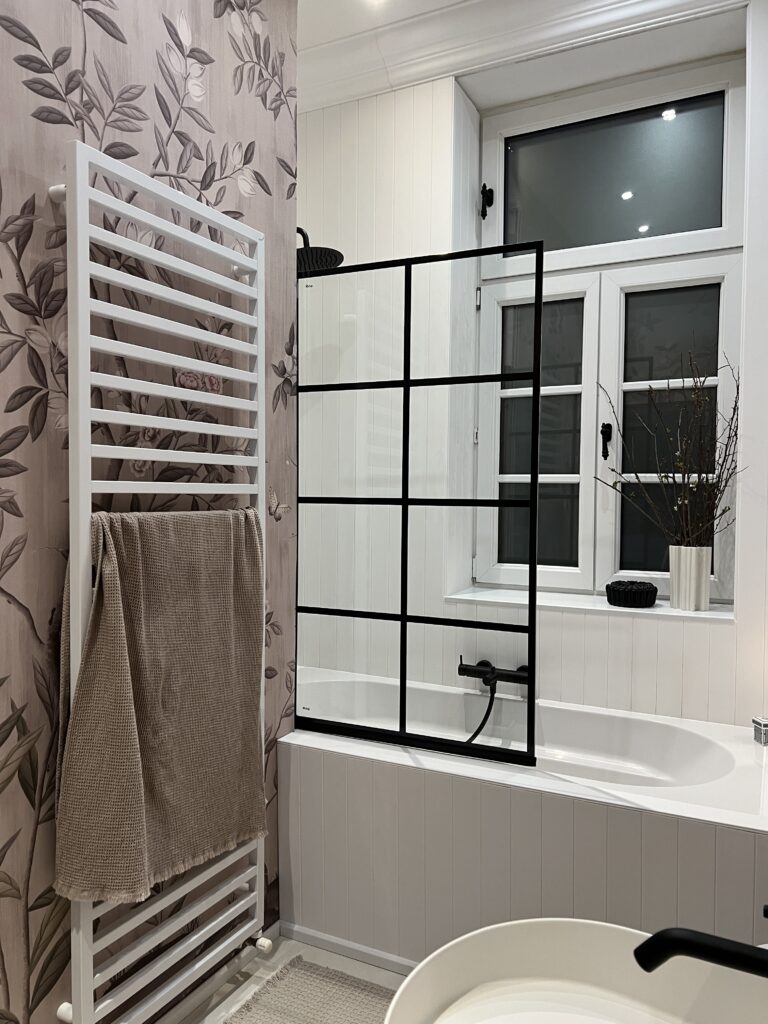
My own bathroom is actually a great example of what’s possible when you have the right people and products to work with.
Unlike the radiators in my living room, I was able to replace the towel radiator in my bathroom. Having worked with Zehnder for years, I decided to work with them on finding a solution that would fit the very specific conditions of my apartment.
The existing space required unusual dimensions and customised connections, so a standard radiator simply wouldn’t have worked. Together with Zehnder, I was able to define exactly what was needed, and they made it happen.
While my bathroom radiator isn’t a Charleston, the experience showed me firsthand how valuable this kind of flexibility can be, especially when working with older properties where not everything can simply be changed or moved around.
Beyond White: Radiator Colours That Become Part of the Interior
When we think of radiators, most of us probably still picture a standard white model sitting underneath a window.
But there’s no reason a radiator should automatically be white, especially when we’re putting so much thought into every other colour and finish in a room.
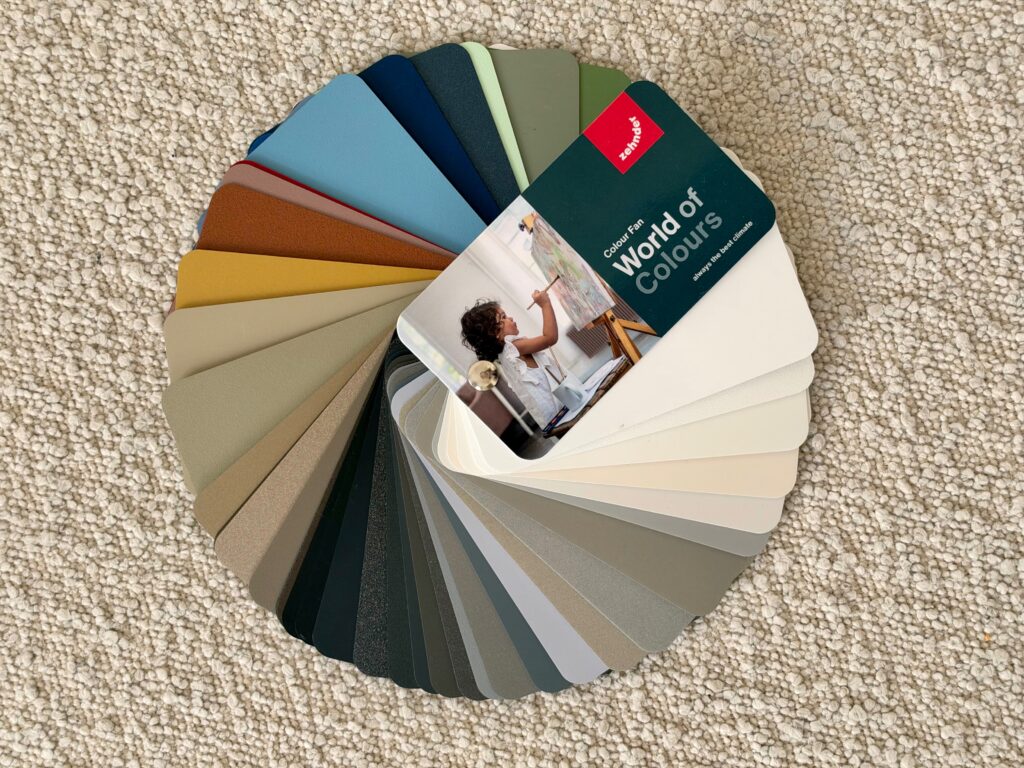
One of the aspects I particularly like about the Charleston is the wide selection of available colours and finishes.
Depending on the interior concept, a radiator can either blend into its surroundings or become a deliberate design feature.
In a softly layered, neutral interior, I might choose a warm off-white or a colour close to the surrounding walls. This creates a calm, cohesive appearance without introducing unnecessary visual contrast.
In a more expressive space, however, a radiator in a deeper colour can be incredibly interesting.
Think muted olive greens, warm browns, rich burgundy tones or other earthy shades that complement the materials and finishes used throughout the room.
Looking Ahead to 2027
When looking at interior design directions for 2027, I’m particularly interested in the continued move towards warmer, more individual and thoughtfully layered spaces.
Natural materials, earthy colours and interiors that feel collected over time rather than designed around one particular trend are all directions I find myself drawn to.
And I think radiators can play a surprisingly interesting role in these concepts.
A beautifully proportioned column radiator in a carefully selected colour can complement timber panelling, natural stone, decorative mouldings or a more contemporary architectural setting.
Personally, I tend to favour solutions that feel integrated rather than overly decorative. But that doesn’t always mean making everything disappear.
Sometimes a little contrast is exactly what a room needs.
The important thing is that the choice feels intentional.
How I Approach Radiators as an Interior Designer
Over the years, I’ve learned that some of the most successful interiors are the ones where functional elements have been considered from the very beginning. And radiators are a perfect example for that!
Whenever I’m working on a renovation or planning an interior concept, there are a few things I pay particular attention to that might help you in your own process:
First, proportions. A radiator should work with the architecture of the room. Its height, width and placement can have a significant impact on how balanced a wall feels, especially when positioned underneath a window or between architectural details.
Second, the existing conditions. Before falling in love with a particular design, it’s important to understand what’s technically possible. Existing connections, wall construction, available space and heating requirements all influence the final choice. As we’ve learned in this blogpost, nearly anything is possible with the Zehnder Charleston, yay!
Third, colour and finish. I always consider whether a radiator should blend into the background or become part of the overall design concept. There isn’t one right answer. It depends entirely on the room. For this, I always work with a colour fan, and ideally with samples once favorite colours have been identified.
And finally, longevity. I don’t believe every element of an interior needs to follow the latest trend. Particularly when it comes to more permanent installations, I prefer designs that will still feel appropriate in ten or twenty years. The Zehnder Charleston has been around for quite some time and is declared as an absolute timeless, classic radiator – a style that will never be out of fashion.
This is also why I believe it’s worth paying attention to radiators early in the planning process.
They’re not necessarily the most exciting item on an interior design moodboard, but choosing the right one can save you from having to design around the wrong one later.
Good Design Is Made to Last
When I think back to the radiator covers I designed for my Vienna apartment, I’m still happy with how they turned out. They were a practical way of making the existing radiators work with my interior, and sometimes that’s exactly what a renovation requires. But the experience also reminded me that we often spend a surprising amount of time and effort trying to conceal functional elements that could have been beautifully integrated in the first place.
That’s one of the reasons I wanted to share the Zehnder Charleston with you.
After almost a century, its design still feels relevant, and the extensive possibilities for adapting it to different spaces make it particularly interesting for anyone working with existing architecture. Whether you’re renovating a period apartment, updating a historic home or planning a completely contemporary interior, it’s worth considering the radiator as part of the design rather than an afterthought.
Because sometimes, the best design decision isn’t finding a clever way to hide something.
It’s choosing something you don’t need to hide at all.
You can explore the different configurations, colours and finishes of the Zehnder Charleston on the official Zehnder website.